
No. A Rock Saw uses a saw-based cutting action, while a Drum Cutter uses rotary picks mounted on a drum.
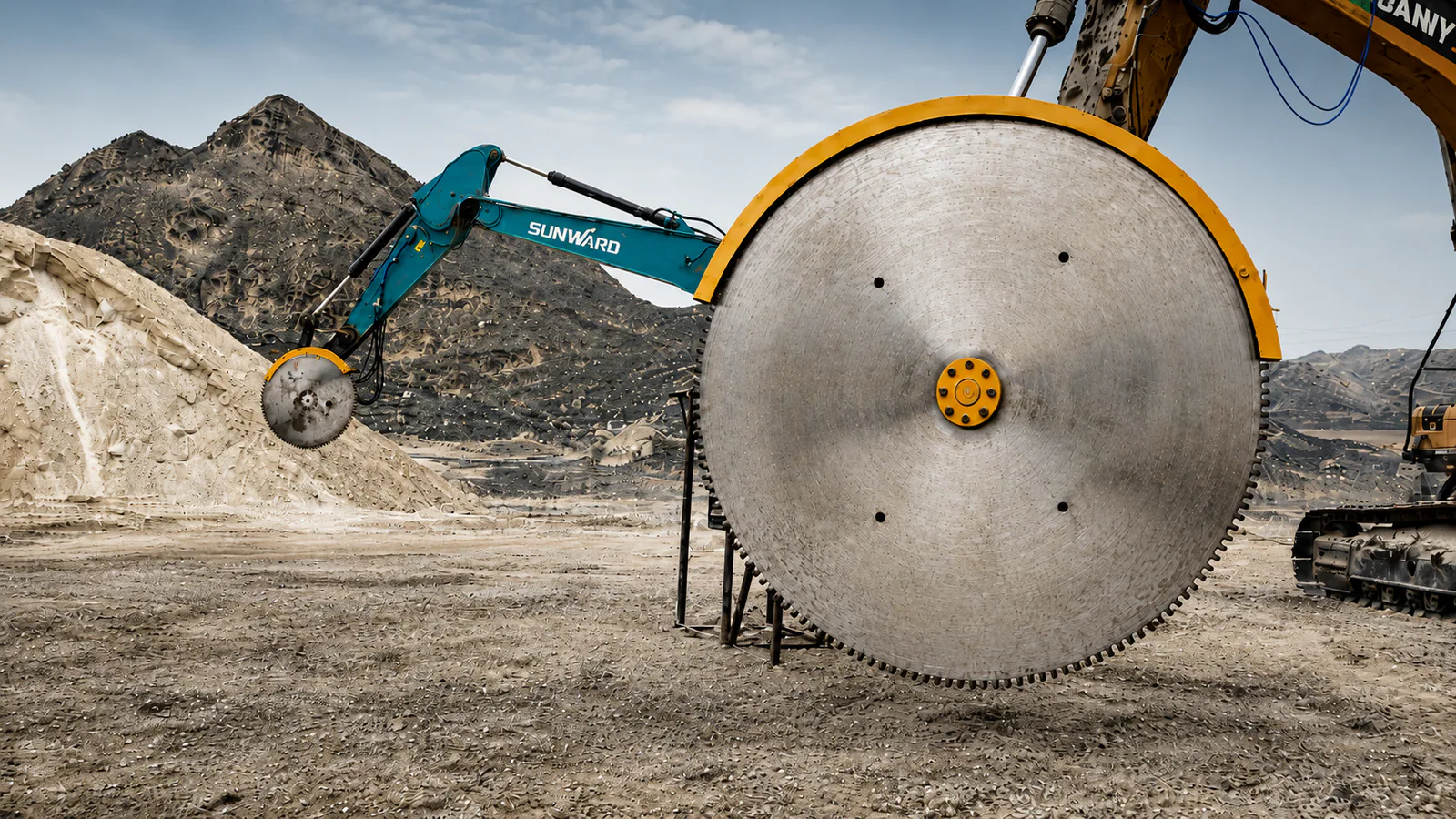
Demolition & Rock
Rock Saw
Clean, controlled cutting in hard rock
MODELS & PARAMETERS
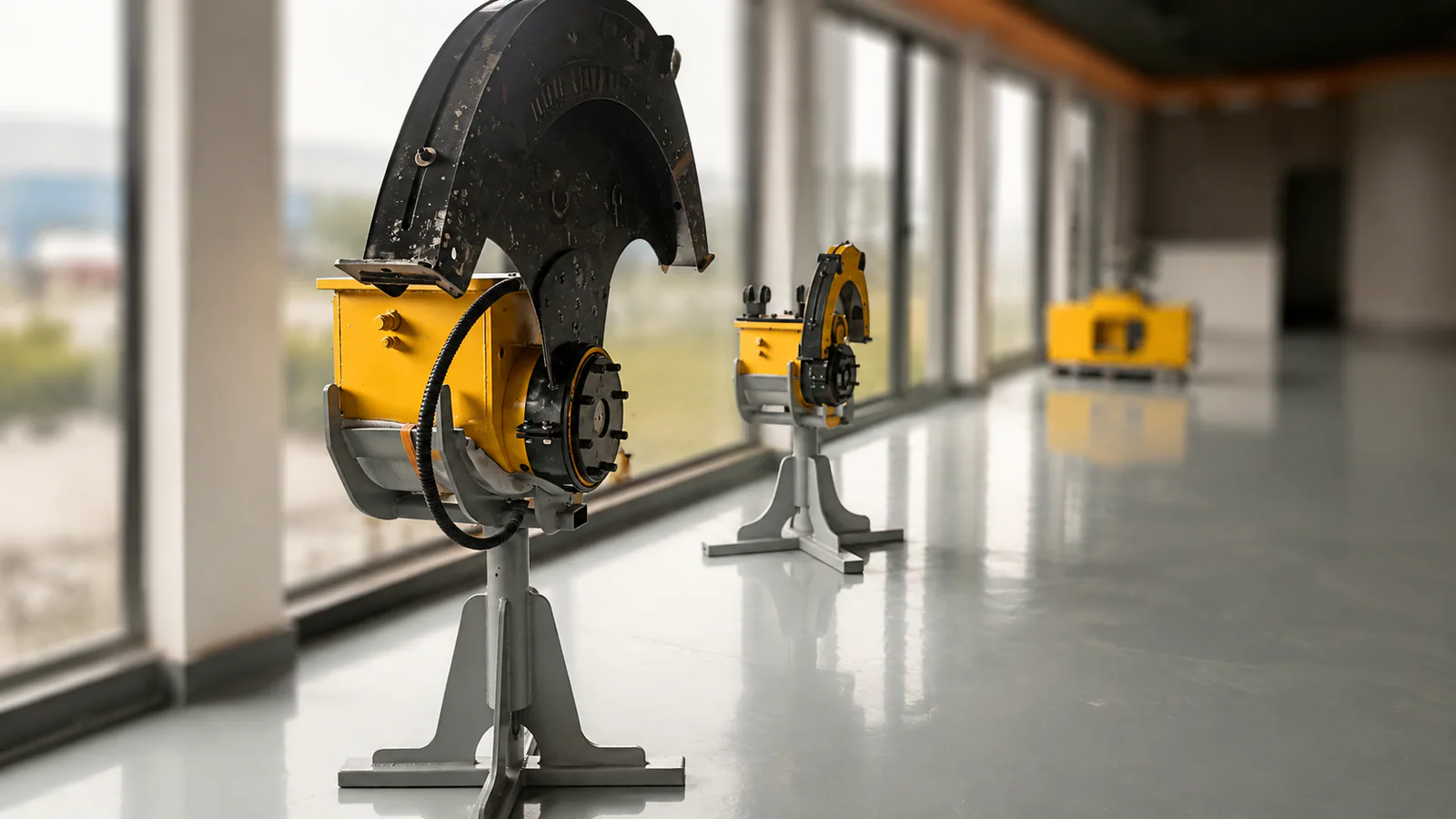
| Model | BRS-12 | BRS-20 | BRS-30 | BRS-40 |
|---|---|---|---|---|
| Excavator Class | 6–12 t | 12–20 t | 20–30 t | 30–40 t |
| Blade Size Range | 1000–1800 mm | 1600–2200 mm | 1600–2600 mm | 2000–3800 mm |
| Recommended Hydraulic Flow | 60–100 L/min | 130–180 L/min | 180–230 L/min | 200–300 L/min |
| Maximum Hydraulic Flow | 150 L/min | 200 L/min | 260 L/min | 390 L/min |
| Maximum Hydraulic Pressure | 320 bar | 320 bar | 330 bar | 330 bar |
| Output Shaft Speed | 0–600 rpm | 0–600 rpm | 0–500 rpm | 0–450 rpm |
| Output Torque @ 320 bar | 600 N·m | 1650 N·m | 2610 N·m | 3200 N·m |
| Product Weight | 250 kg | 350 kg | 450 kg | 550 kg |
Excavator weight is an initial selection reference. Final model selection also depends on hydraulic capacity, blade configuration and the cutting application.
Specifications are based on the current standard configuration and may vary with blade selection, excavator hydraulics and application requirements. Final configuration is confirmed according to the actual carrier and working conditions.
SAW-BASED CUTTING
The Rock Saw uses a saw-based cutting action rather than the percussive action of a breaker or the rotary pick action of a drum cutter.
The cutting system and operating setup must be matched to the material, required depth, excavator and site conditions.
A standard Rock Saw follows the position created by the excavator arm and mounting geometry. Independent rotation is a separate configuration and requires an appropriate additional hydraulic circuit.
APPLICATIONS
FREQUENTLY ASKED QUESTIONS
No. The material, cutting task, required depth, excavator model, mounting context and operating conditions should be reviewed together.
Current model options and technical values are confirmed during the quotation process against the required work and machine.
ASKABOUTTHISPRODUCT
Discuss available models, configurations, wear parts, delivery terms or a specific application