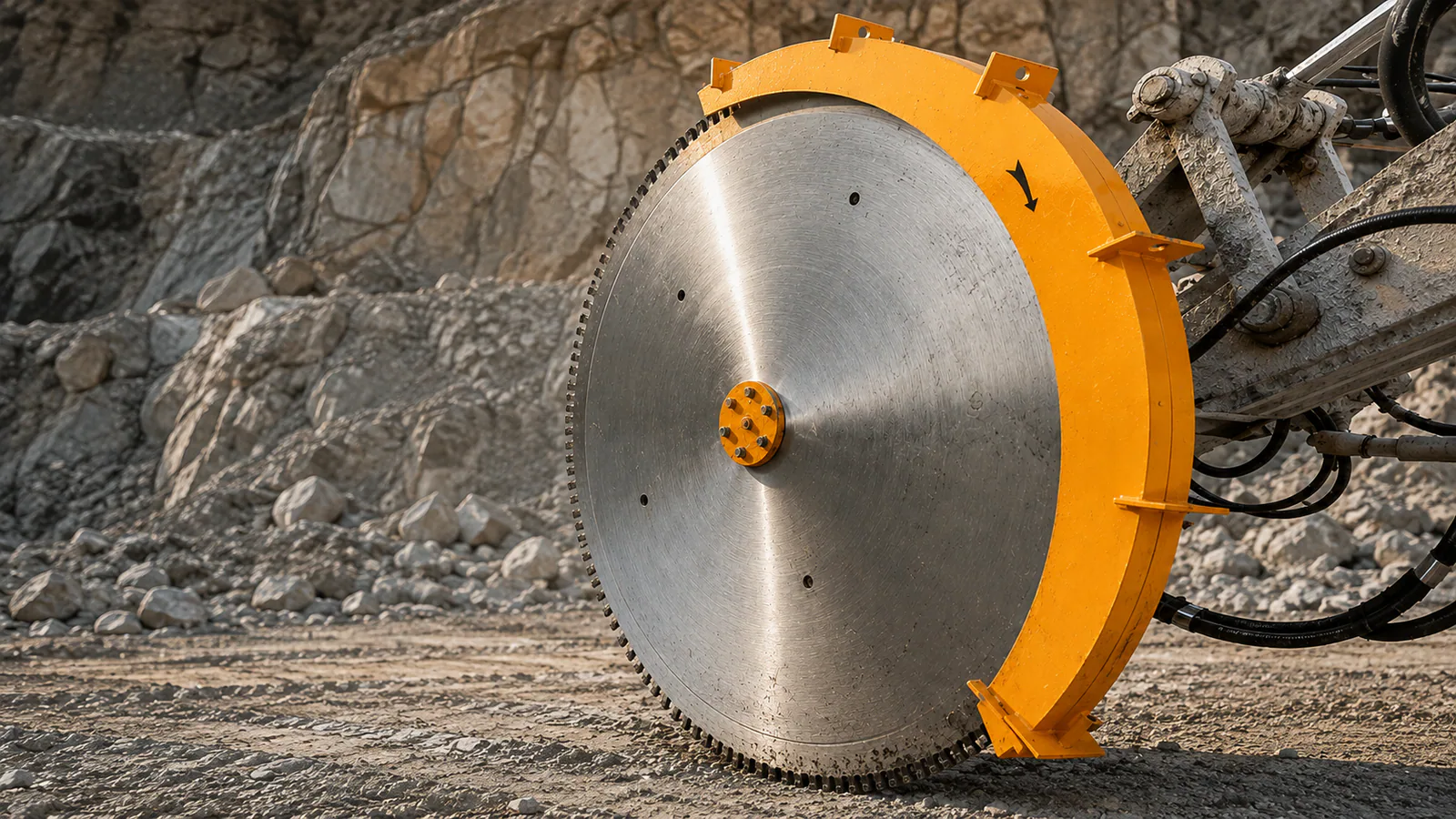
Choosing an excavator Rock Saw often starts with a simple question:
“What size Rock Saw should I match to my excavator?”
Excavator tonnage is useful, but it is only one part of the selection process. A better starting point is the actual cutting task.
1. Required Cutting Depth
First confirm how deep the job actually needs to cut. Blade diameter and usable cutting depth are not the same thing. The hub, drive system, guard and attachment geometry all occupy part of the blade radius. For that reason, the required cutting depth should be confirmed before choosing the blade size.
Selecting the largest possible blade is not automatically better. An unnecessarily large configuration may add weight and hydraulic demand without improving the actual job. The required cut should determine the blade, not the other way around.
2. Cutting Material
The material also matters. Natural rock, reinforced concrete and other hard materials place different demands on the cutting system. Material condition affects blade selection, cutting behaviour, wear and service life. Two jobs requiring the same cutting depth may therefore need different blade configurations.
3. Exact Excavator Model
The exact excavator model allows the remaining technical compatibility to be checked more accurately. This includes:
- hydraulic flow and pressure
- mounting dimensions
- attachment weight
- machine compatibility
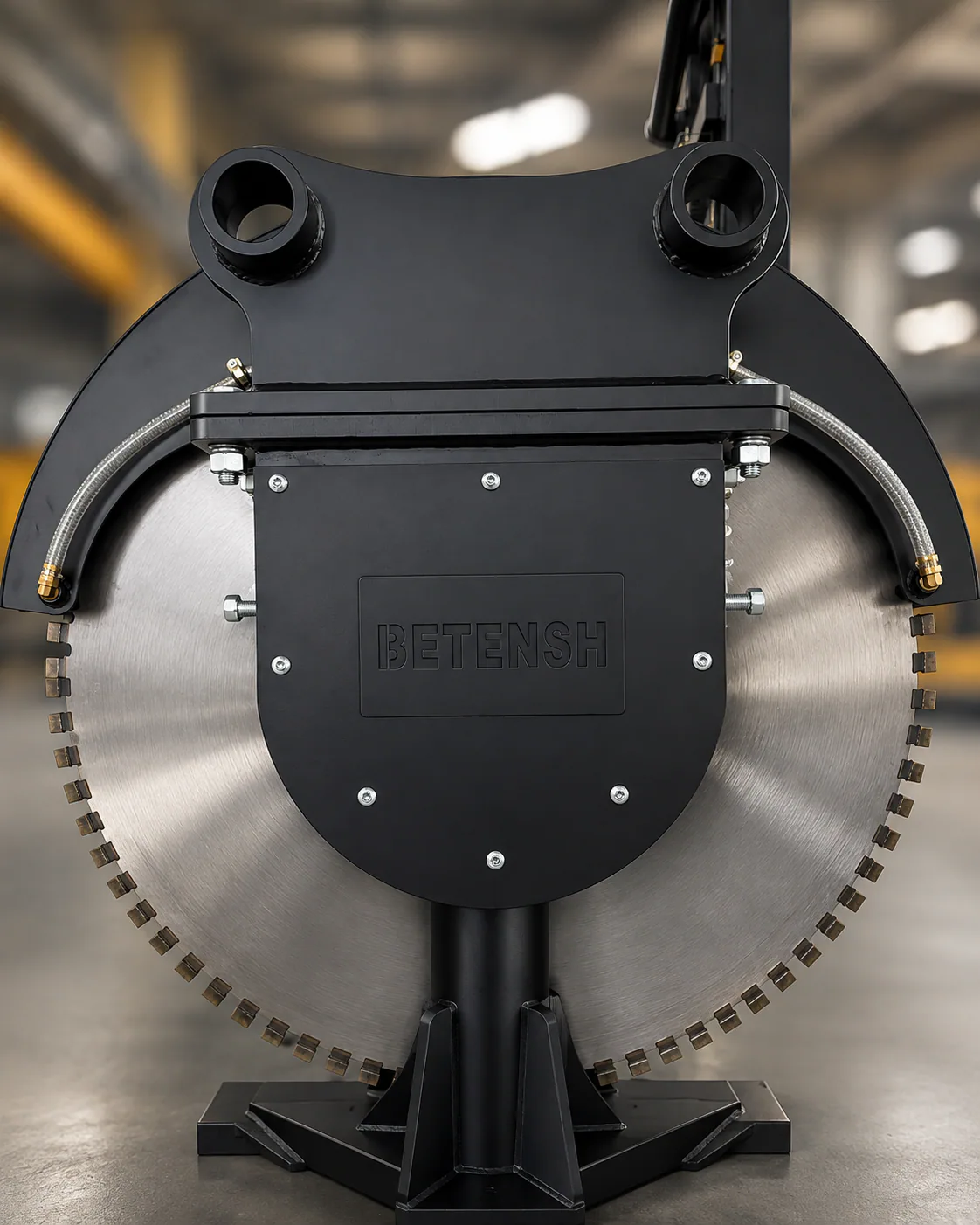
If independent rotation is required, that should also be confirmed before final configuration. The selection sequence is therefore:
Cutting depth → Material → Excavator model → Rotation if required → Hydraulic and mounting verification
A Rock Saw should not only fit the excavator. It should fit the job.