Begin with what enters the head
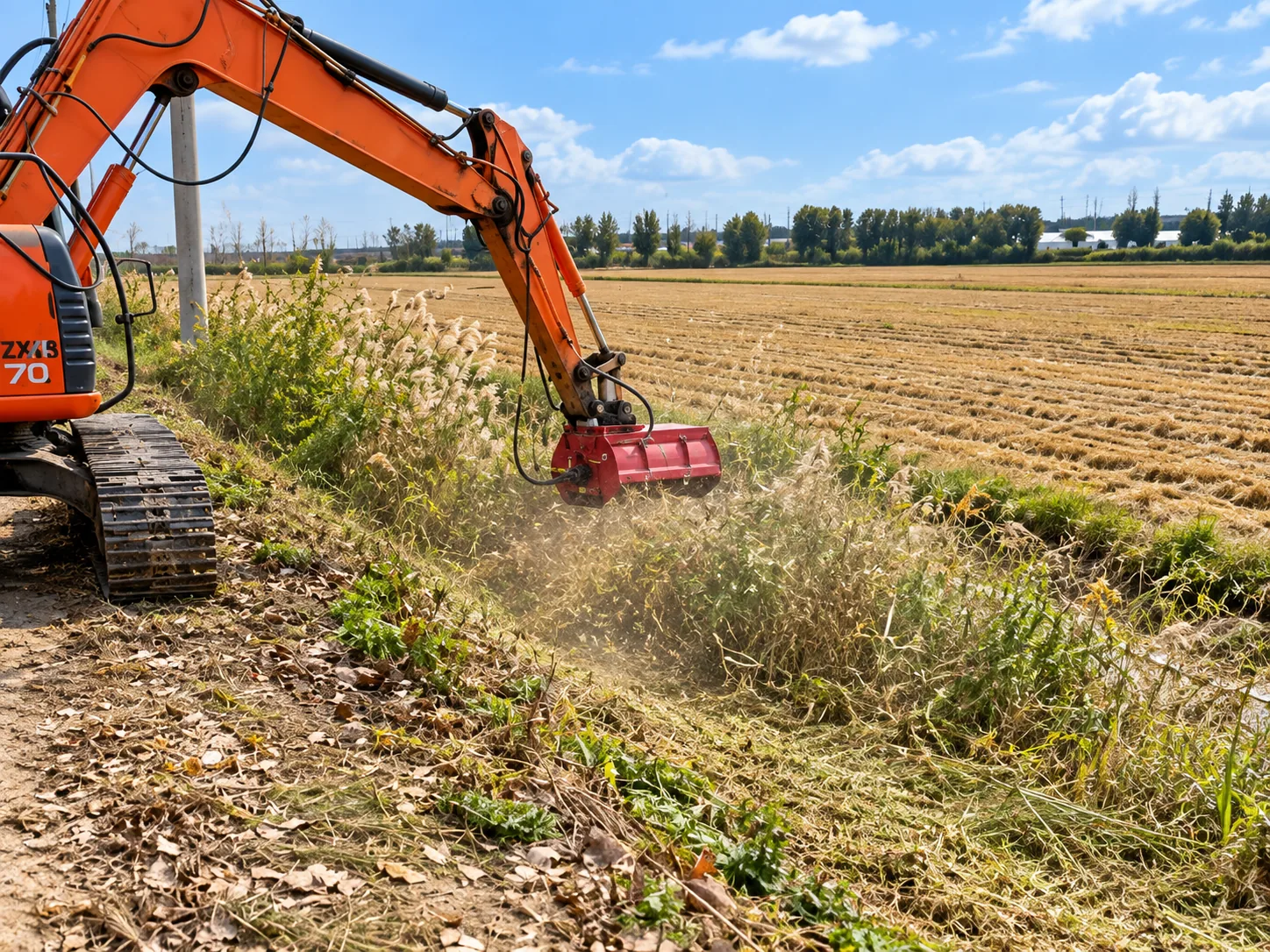
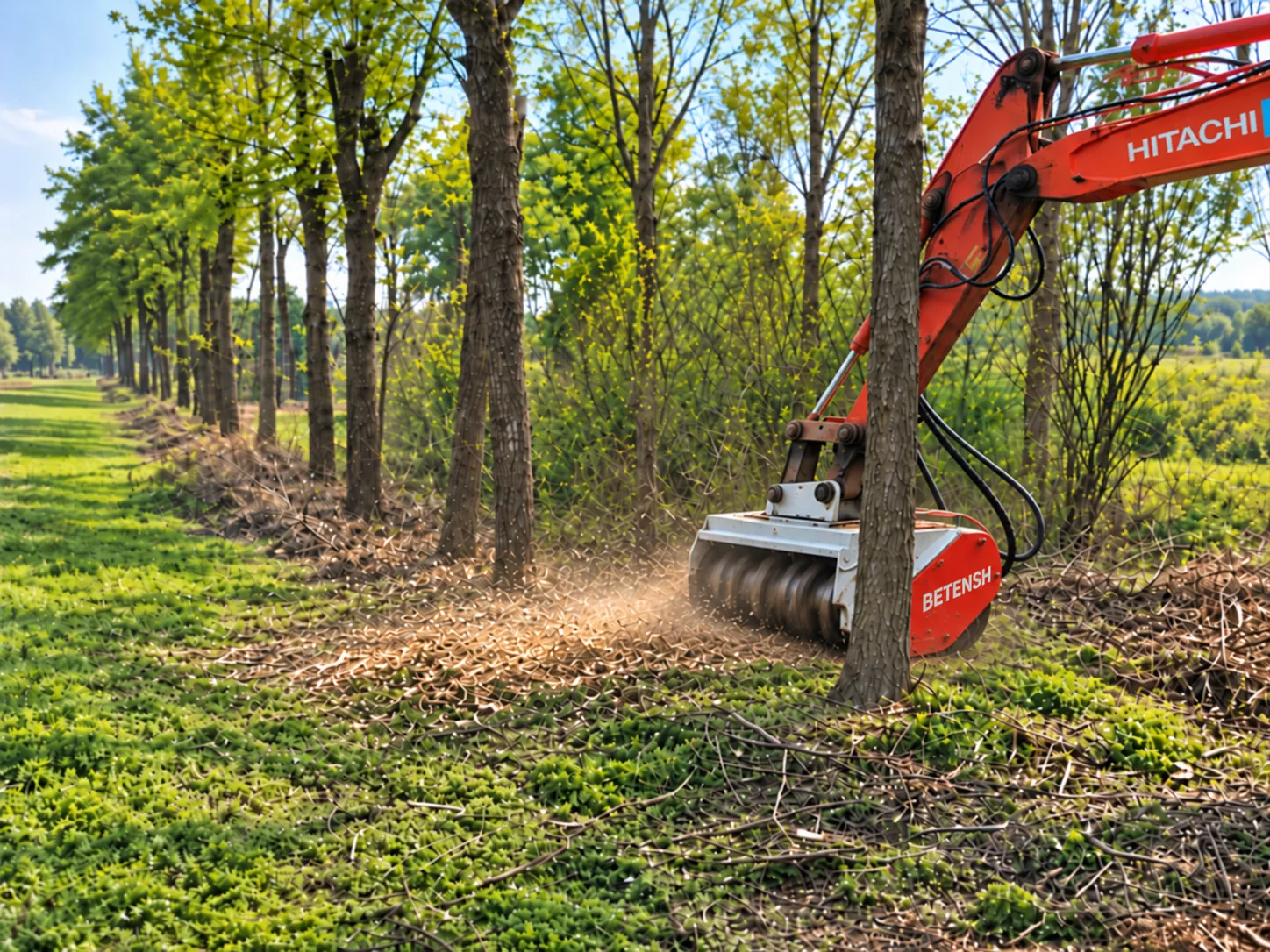
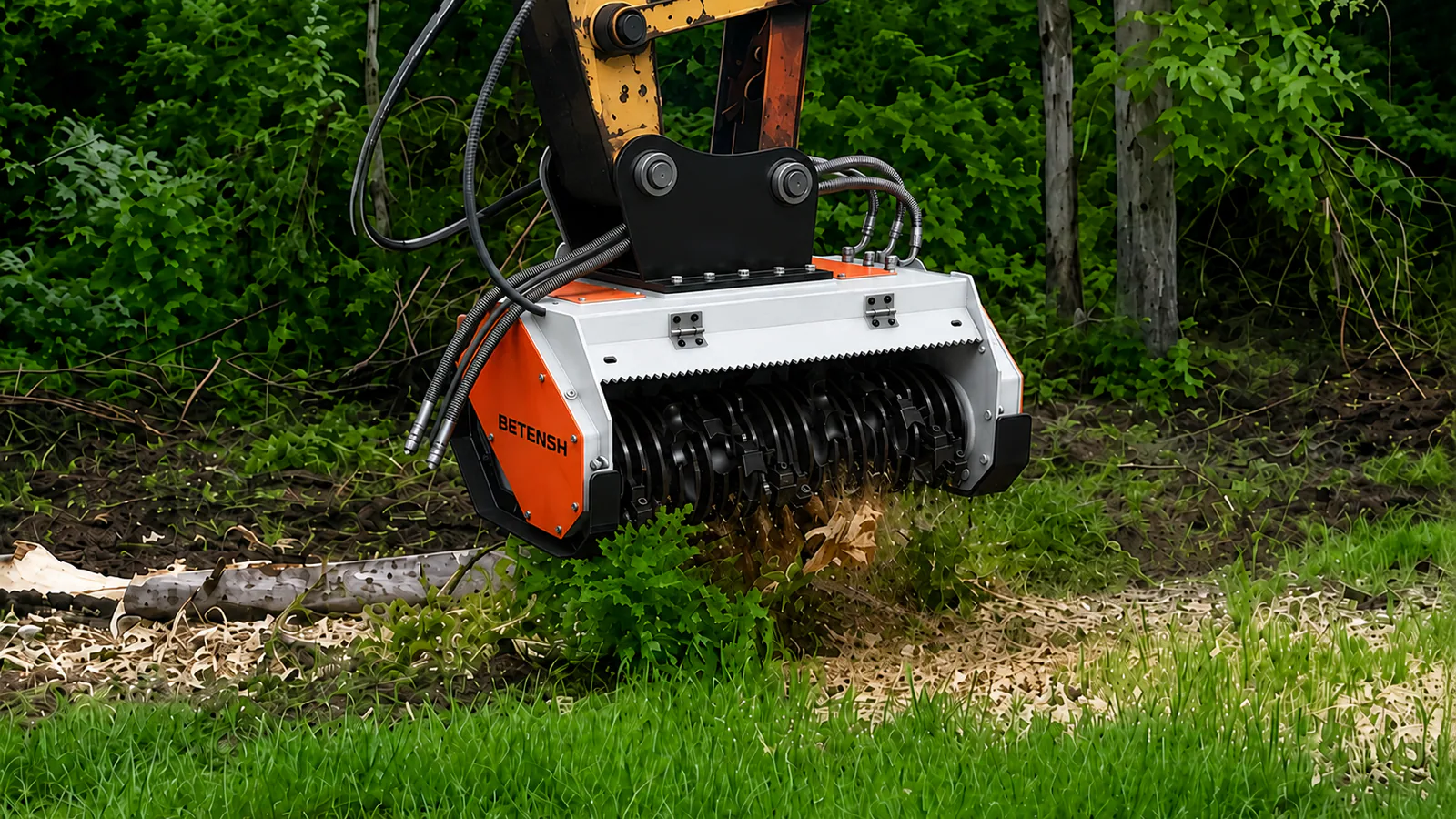
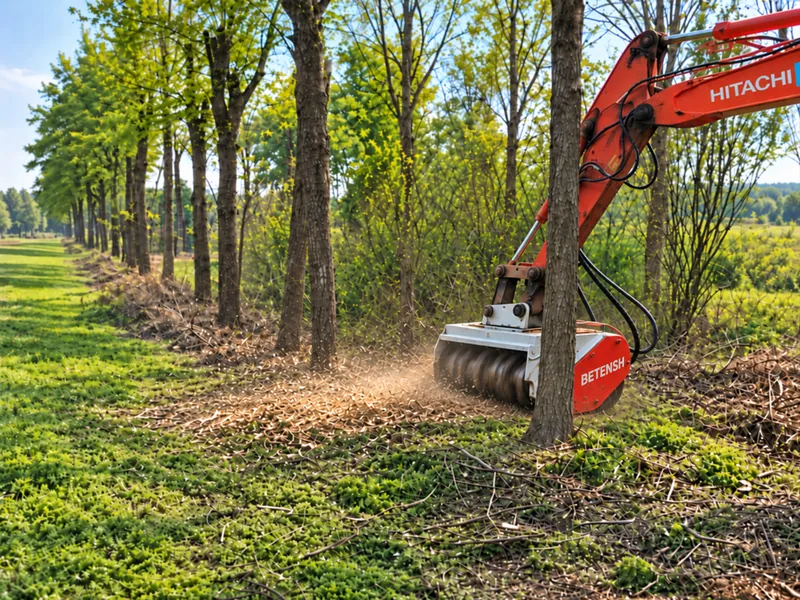
For mowing grass, reeds and similar soft growth, the Grass Cutter / Flail Mower uses a belt-driven horizontal rotor with Y blades. Its stated soft-stem guidance is generally within 2 cm. The Forest Mulcher uses a rotor with individually replaceable working tools for brush, shrubs, saplings and dense woody vegetation. Soft grass and woody stems present different tasks, even at the same site.
Consider the result you need
Routine mowing keeps soft vegetation under control. Woody clearing calls for repeated engagement by the mulcher’s working tools. The head’s movement and repeated passes can change how material is broken down; vegetation, working method and the selected setup still affect the result. Describe the required finish as well as the growth to be cleared.
Match the actual excavator
The BGC table begins at a listed 1–3 ton carrier range; the BFM table begins at 3–5 ton and extends through several larger ranges to ≥20 ton. These are model-specific starting guides. Compare all eight BGC models or all seven BFM models, then check the exact machine rather than treating either product as one size.
Choose width after machine matching
Consider the available space, the area to work and the width you want to cover. For example, BFM-600, BFM-700 and BFM-800 list the same 3–5 ton carrier range, with different widths and weights. That does not assign a separate vegetation type to each width. A wider head is not automatically the better choice.
Check the mounting arrangement
Match the chosen head’s mounting interface and attachment weight to the excavator. Raising the Grass Cutter’s front intake can assist taller soft vegetation; it does not set cutting height or turn the head into a woody-brush mulcher.
Carry useful information into selection
Start with the excavator model, vegetation photos or a description, available working space and the result you need. If the site mixes soft growth and woody stems, describe both. Use the Grass Cutter selection notes and Forest Mulcher selection notes for the next checks.