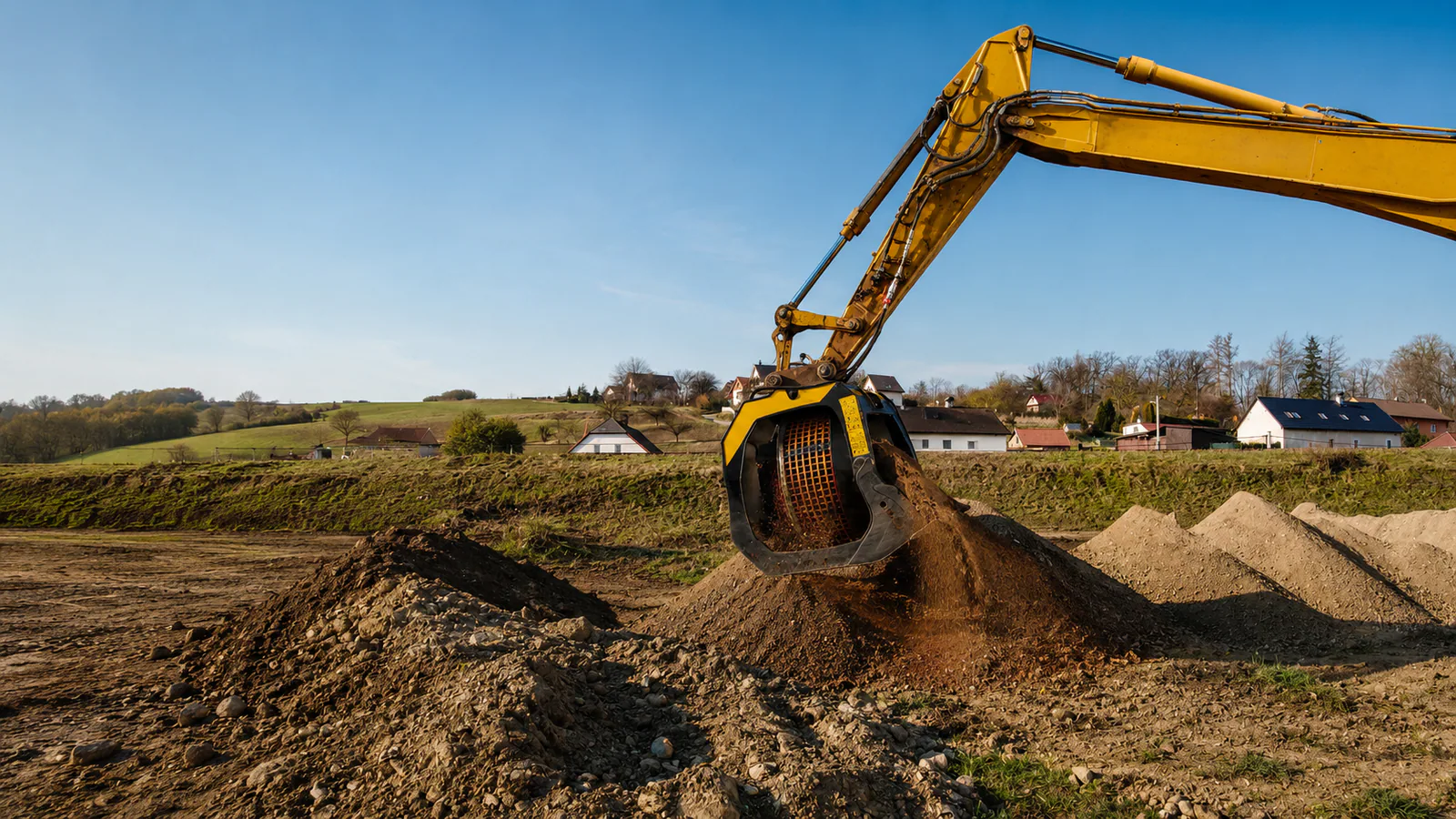
When choosing a Screening Bucket, it is easy to assume that a smaller screen opening will produce a better result. In practice, the smallest opening is not automatically the best choice. The correct screen should start with the material you actually need to produce.
Start With the Required Final Size
The first question should be: What particle size should pass through the screen?
A finer opening is useful when a finer screened fraction is genuinely required. But choosing a smaller aperture simply because it is available can make the screening process unnecessarily restrictive. The required output should determine the screen opening.
Material Condition Changes the Result
The same screen opening can behave very differently with different materials. Dry, loose soil may pass through easily, while wet soil, cohesive fines or sticky material can bridge across the openings and reduce screening efficiency. Aggregate and mixed material can behave differently again. That is why screen size should never be considered separately from material condition.
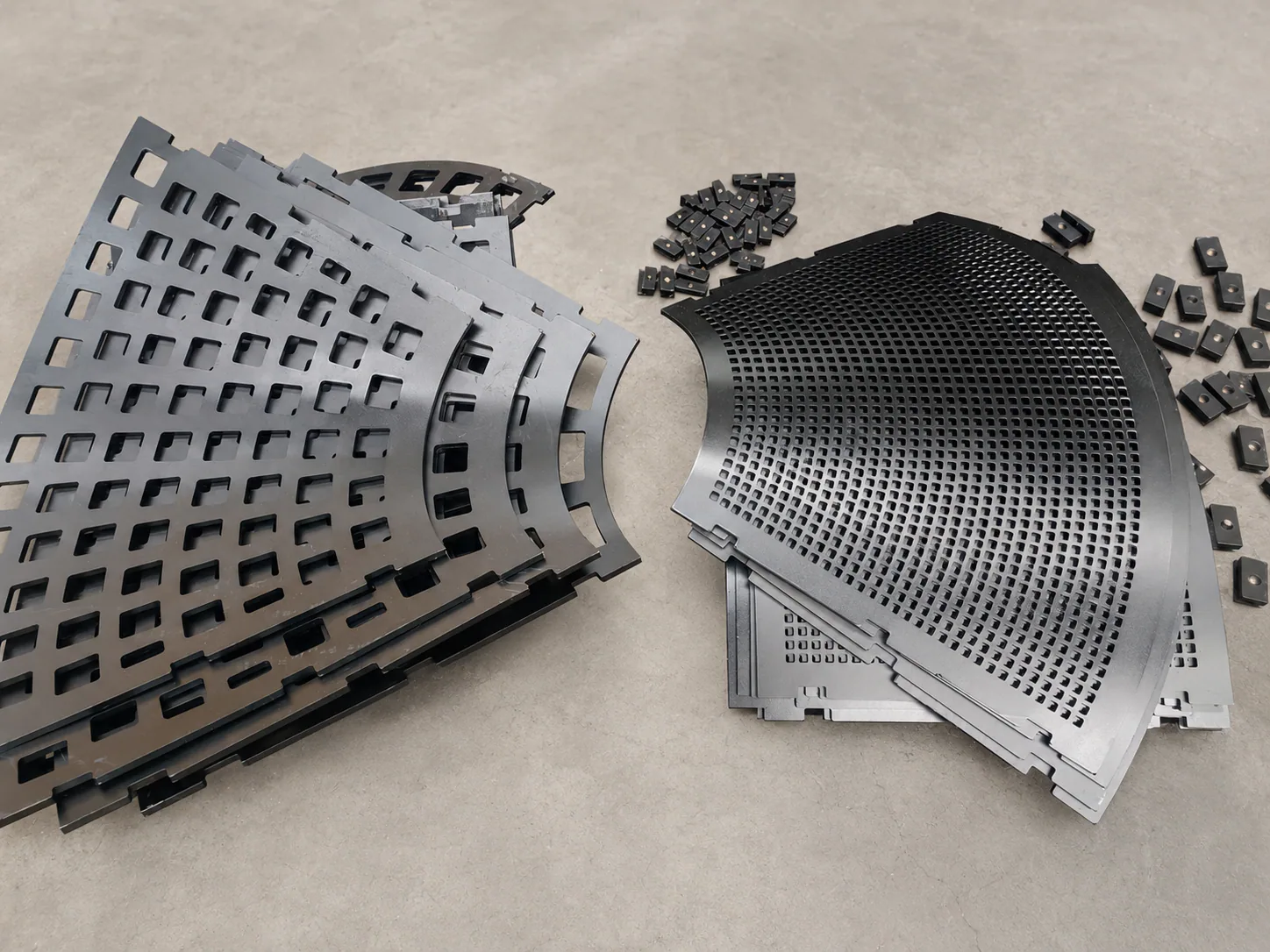
Think About Both Fractions
Screening is not only about what falls through. You should consider: What should pass through the screen? and What should remain inside as oversize? Both sides are part of the final result.
Before selecting a screen, confirm:
- What material are you screening?
- What final particle size do you need?
- Is the material dry, wet or sticky?
- What excavator model will operate the bucket?
Operator technique, loading volume, drum position and discharge also influence real screening performance. The best screen opening is not the smallest one. It is the one that gives you the right material at the end of the process.